
Why Exhaust Gas Data Reveals New Opportunities for Ventilation Optimization
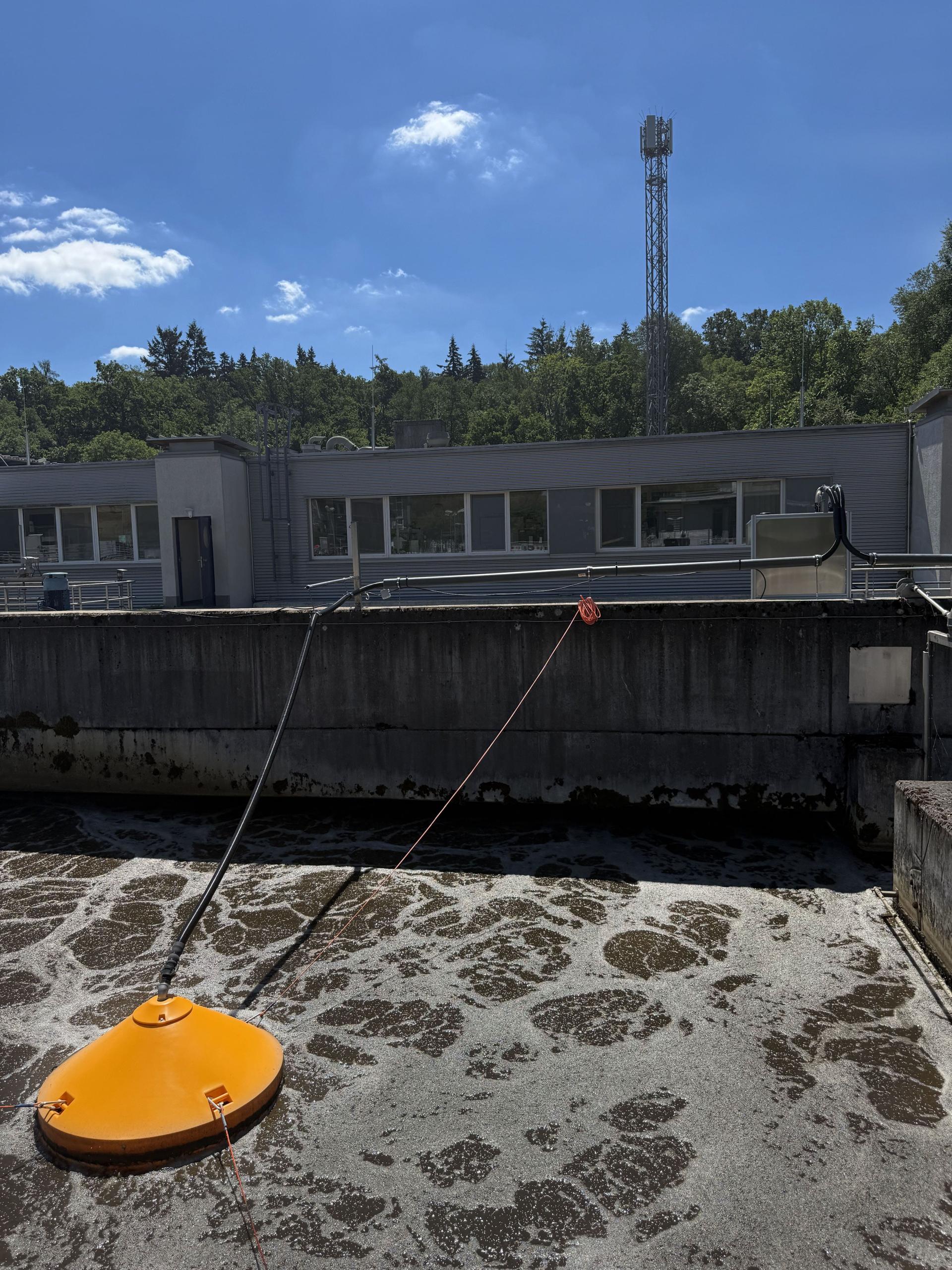
This case study demonstrates how continuous off-gas measurements can reveal excess aeration that cannot be detected using conventional DO sensors alone. By analyzing CO₂ and O₂ together, it was possible to identify a potential reduction of up to 7% in blower energy consumption without compromising treatment performance.
Frequently asked questions
We call for mandatory, continuous, real-time measurement of nitrous oxide starting at 10,000 PE—or, alternatively, at 30,000 PE—at at least one representative point in the biological treatment stage. According to the paper, facilities with a capacity of over 30,000 p.e. account for more than 50% of the sector’s nitrous oxide emissions. Facility-specific emission factors based on direct measurements would be reported annually. The current Article 21 of the EU Urban Wastewater Treatment Directive (UWWTD) continues to permit analyses, calculations, or modeling.
Compliance reporting must be based on measurements. Standard emission factors and unvalidated models are not a substitute. Validated models are welcome as a decision-making aid. The paper is based on the largest analysis to date, comprising 376 emission factor observations from 119 studies (Song et al., 2024, Nature Sustainability): Nitrous oxide emissions vary by more than two orders of magnitude between facilities and over time—a single factor is not sufficient.
Nitrous oxide is both a climate hotspot and an indicator of nitrogen removal. Now is the time to act on the implementing regulation. According to the paper, the implementing and delegated acts for the amended EU Urban Wastewater Treatment Directive (UWWTD) will be drafted in 2025–2026. Once a method based on flat-rate emission factors or models is enshrined in secondary legislation, it becomes virtually impossible to change it for a decade.
The paper proposes at least one measurement every five minutes, an expanded measurement uncertainty of no more than 15 percent, and calibration traceable to international standards—at at least one representative point in the biological stage. The coalition is deliberately not committing to any single technology: performance criteria, not the choice of technology, should determine the regulations. These are proposals, not applicable law.
According to the paper, the amended EU Urban Wastewater Treatment Directive (UWWTD) introduces significantly stricter limit values for total nitrogen—typically 8 mg N/L for facilities serving 10,000 PE or more, down from the previous 15 mg/L. Nitrous oxide is the most sensitive indicator available for inefficient biological nitrogen removal. A single measurement thus fulfills two requirements: climate reporting and compliance with nitrogen discharge limits. Many facilities will need to optimize their operations rather than build new ones.
According to the paper, turnkey N₂O measurement systems are comparable in cost to other continuous sensor installations commonly used at wastewater treatment plants. It lists EU instruments that can help finance implementation in Member States with limited resources: LIFE, the Cohesion Fund, the ERDF, and REPowerEU. The proposed alternative threshold of 30,000 PE would provide additional protection for the smallest operators. To receive a quote for your facility, please send us a request.
The paper was published in June 2026 in Brussels by the European Industry Coalition for Cost-Effective N₂O Monitoring. Signatories include Xylem, Variolytics, Unisense Environment, Haskoning, upwater, Veolia, Cobalt Water Global, Jacobs, and the BINDER Group. It was submitted to the Directorate-General for the Environment (DG ENV), the ENVI Committee, and the Council Working Party on the Environment. Coalition contact: Dr. Matthias Stier, CEO, Variolytics GmbH (matthias.stier@variolytics.com).
